
Whether you're finishing school, leaving sixth form or thinking about a career change later in life, understanding which apprenticeship level suits your current education level will allow you to choose the right starting point. With the right training, you can earn while you learn and get your career off to a great start.
Below, the Lanes recruitment team breaks down how apprenticeships work, what you need to get in and how to decide which apprenticeship level fits you.
How do Apprenticeships Work?
An apprenticeship is a real, paid job with hands-on learning built in. You're employed from day one and spend part of your week gaining the skills the role needs. To start one you need to be 16 or over, living in England, and not in full-time education.
As an apprentice you're entitled to the same rights as other employees. That includes holiday pay of at least 20 days a year plus bank holidays. You also get at least 20% of your normal working hours set aside for training and study related to the role, usually with a college or training provider, so you can build job-specific skills.
Pay is protected too. The apprentice National Minimum Wage is £8.00 an hour from 1 April 2026. This apprentice rate applies if you're under 19. After that, older apprentices move up to the full minimum wage for their age, and many employers, including Lanes, pay above the minimum.
A Quick Overview of the Apprenticeship Levels
Apprenticeships in England are grouped into four named tiers, spread across Levels 2 to 7. Here are the different levels at a glance:
-
Intermediate, Level 2, equivalent to GCSE passes
-
Advanced, Level 3, equivalent to two A level passes
-
Higher, Levels 4 and 5, equivalent to a foundation degree or higher national qualification
-
Degree, Levels 6 and 7, equivalent to a bachelor's degree or master's degree
As a rough guide, apprenticeships range from around 8 months to six years to complete, depending on the level and the type of role. The higher you climb these levels of apprenticeship, the longer and more advanced the study. Let’s walk through each tier:
Intermediate apprenticeships (Level 2)
In May 2025, the government introduced Foundation Apprenticeships, a new Level 2 route aimed at under-21s, as part of a wider push to expand apprenticeships. This is ideal for school leavers with few or no formal qualifications who want to earn while they build skills through practical training on the job.
What it's equivalent to: a Level 2 apprenticeship is equivalent to a set of GCSE passes.
How long it takes: typically around 8 to 18 months to complete.
Entry requirements: for most Level 2 roles there are no strict entry requirements. If you don't already have GCSEs in English and maths, you can gain them through functional skills, which you study alongside the job during working hours.
Advanced apprenticeships (Level 3)
An advanced apprenticeship sits at Level 3. It suits people who already have some GCSE qualifications, or who've finished a Level 2 apprenticeship and want to take the next step in their chosen career.
What it's equivalent to: A Level 3, or advanced apprenticeship level, is equivalent to two A level passes.
How long it takes: typically 18 to 24 months to complete.
Entry requirements: many employers ask for a handful of GCSEs, usually including English and maths, or a completed Level 2 apprenticeship. Some set their own specific criteria depending on the industry.
Higher apprenticeships (Levels 4 and 5)
This is university level study done in the workplace rather than in full-time education, and higher apprenticeships are a strong route into technical and supervisory roles. Some programmes also include an additional qualification alongside the main apprenticeship standard.
What they're equivalent to: a Level 4 lines up with the first year of an undergraduate degree, or a Higher National Certificate (HNC), placing it within higher education. A Level 5 is equivalent to a foundation degree or Higher National Diploma (HND).
How long it takes: these usually take two to five years to complete, depending on the course.
Entry requirements: employers typically ask for A level passes, an advanced apprenticeship, or an equivalent qualification. Some accept relevant professional experience from your current role instead.
Degree apprenticeships (Levels 6 and 7)
At the top of the ladder sit degree apprenticeships, covering Levels 6 and 7. This is the highest level of apprenticeship, and you can earn a full degree this way.
What it's equivalent to: a bachelor's degree at Level 6, or a master's degree at Level 7.
How long it takes: usually three to six years to complete, depending on the subject.
Entry requirements: you'll usually need A levels, a Level 3 qualification, or a higher apprenticeship, along with any specific criteria the employer and university set. Because it leads to a genuine degree, the standards match university level study.
Apprenticeship vs University
So why choose an apprenticeship over the traditional university route? For a lot of people, it comes down to earning while you learn. Here's what an apprenticeship gives you that a full-time university course often doesn't:
-
A salary from day one, instead of building up student debt
-
Real industry experience and job specific skills that employers actually want
-
A foot in the door with an employer, often with a job at the same company at the end
-
A recognised qualification, right up to a bachelor's or master's degree
You finish with professional experience on your CV and gain industry experience that classroom study alone can't match, all without the tuition fees or student debt a university degree can bring. For many young people and career-changers, that's a powerful combination.
How to Choose the Right Apprenticeship Level for You
Choosing between all the different apprenticeship levels is simpler than it looks. Start with where you are now, then match it to the right rung:
-
Leaving school with few qualifications? Start at Level 2, an intermediate apprenticeship.
-
Have some GCSEs? A Level 3 advanced apprenticeship could be your starting point.
-
Already got A levels or a Level 3? Look at higher apprenticeships or a degree apprenticeship.
-
Changing careers with professional experience behind you? You may be able to join at a higher level.
There's no single right answer, and the best level depends on your goals as much as your qualifications. If you're unsure, a training provider or employer can help you find the level that fits.
Start Your Apprenticeship With Lanes Group
Lanes Group is the UK's biggest privately-owned specialist drainage contractor. We run apprenticeships that let you earn while you learn, backed by in-house City & Guilds training. From drainage network operatives to driver operators, there's a real career here whatever level you start at.
Ready to take the first step? Explore apprenticeship opportunities at Lanes and see what's open near you.


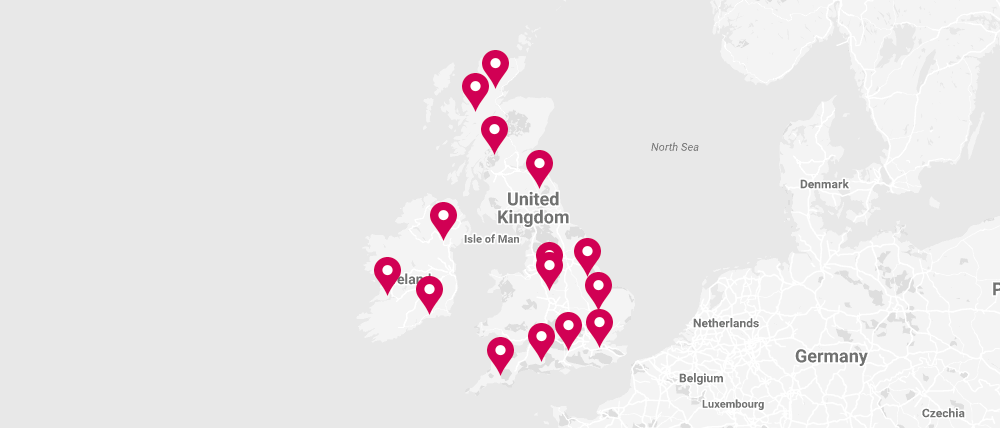
Our Offices, Divisions & Depots

Lanes Group Ltd,
17 Parkside Lane, Parkside Industrial Estate, Leeds, LS11 5TD
Lanes Group ltd
Customer Solutions Centre
9 Cambridge Avenue
Slough
SL1 4AY
Our News Feeds
Andy’s jobs journey reaches fulfilment down in the sewers
Andy led the Lanes emergency team, working on behalf of Thames Water, that first responded to the discovery of the Islington concreteberg.
Why Lanes Group - and the drainage sector - is perfect for those looking for a new career
Find out more about what makes the drainage sector such an attractive proposition for those looking for a change in career.
Where to start when making a career change
Let us help you understand your options when it comes to changing careers
How to successfully apply for a role as a Lanes Group CCTV engineer
Find out more about what we're looking for in our CCTV engineers, and how to maximise your chances of securing a role with Lanes Group.
What it’s actually like to work in the drainage industry
In this article, we look at the many great things about working in the sector and show you what it’s really like to have a career in this growing sector, while busting a fair few myths in the process.
Vicky has perfect role keeping online sales flowing
Personality, determination and a very good understanding of the drainage industry – all qualities that Vicky Smith puts to excellent use as an online sales executive at Lanes Group plc.